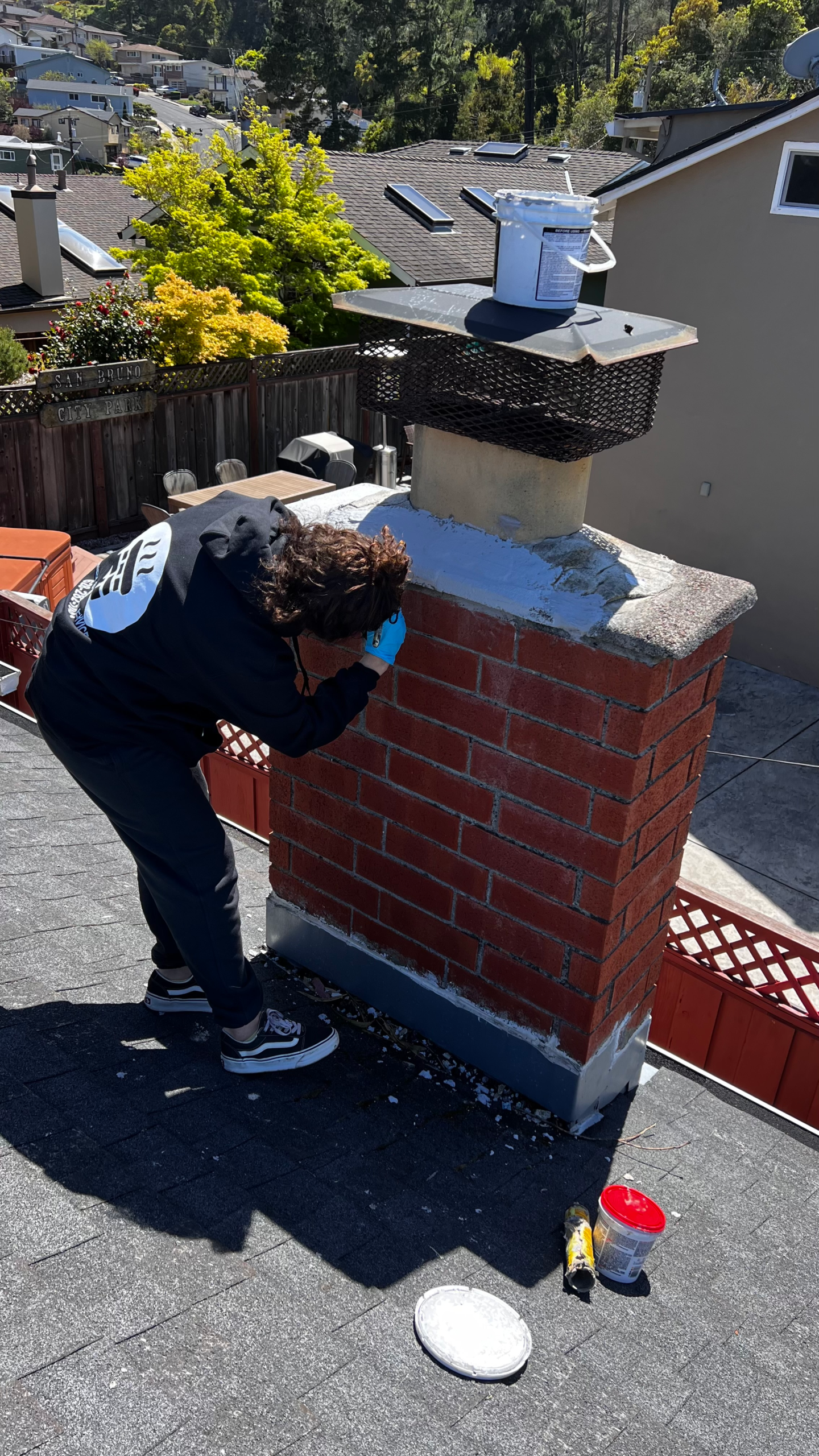
Chimney problems rarely appear all at once. Most issues develop gradually. A small crack appears in the crown. Rust forms on the damper. A mortar joint starts to crumble. Much of the chimney system sits out of sight. As a result, early warning signs often go unnoticed. By then, the repair has grown far more involved. Spotting the early signs that your chimney needs repair matters: the Chimney Safety Institute of America recommends a yearly inspection so a small chimney repair never turns into a major rebuild.
Knowing what to look for helps you catch problems while they are still manageable. Here are seven signs that your chimney may need repair. Acting sooner rather than later always pays off.
1. Cracks in the Chimney Crown
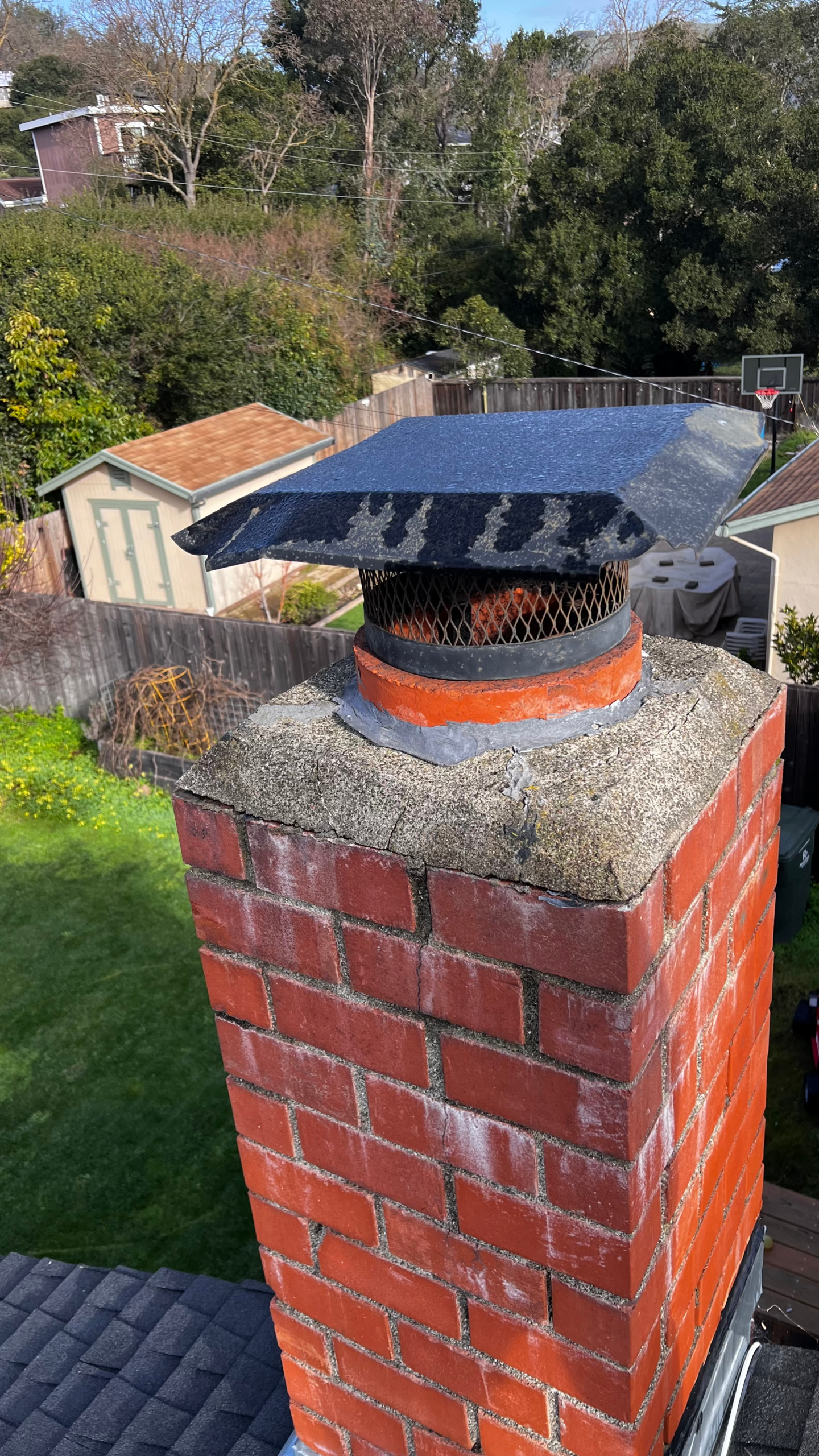
The chimney crown is the concrete or mortar cap on top of the chimney. In short, it seals the structure around the flue opening. It is designed to direct water away from the chimney and protect the masonry from moisture. Crowns crack as they age and shift with temperature changes. Once they do, water seeps straight in.
A cracked crown is one of the most common sources of chimney water damage. Left unaddressed, water intrusion can deteriorate the mortar, damage the liner, rust metal components, and cause more extensive structural issues. Crown repair is one of the less expensive chimney repairs, but ignoring it can lead to much costlier work.
2. Damaged or Spalling Brick and Mortar
Look at your chimney exterior from the ground. Look for bricks that flake, chip, or crumble, and for mortar joints that look recessed or cracked. Experts call this spalling. Ultimately, it signals that moisture has been working in over time.
Mortar is softer than brick and deteriorates first. When mortar joints fail, water enters the masonry and can freeze and expand in colder temperatures, accelerating the breakdown. Tuckpointing repoints the deteriorated joints. Done early, it restores the masonry and prevents further damage before the brick fails.
3. Water Stains Near the Fireplace
Water stains near your fireplace or inside the firebox send a clear signal. Clearly, water is entering the chimney system somewhere. Common sources include a cracked crown, damaged flashing, a missing or damaged chimney cap, or deteriorated masonry.
In the Bay Area, coastal moisture and seasonal rain are common. Unprotected chimneys take on water far more easily here. If you see staining, an inspection is the right first step to find the source and make the correct repair.
4. Rust on the Damper or Inside the Firebox
Rust is a direct sign of moisture in places it should not be. Open your firebox and check the damper and metal parts. As a result, rust there means water has been getting in. A rusted damper no longer seals well. As a result, it wastes energy and lets in drafts, rain, and animals.
Rust on the firebox walls can also indicate that the firebox itself is compromised. Fix the source of the moisture first. After that, clean, treat, or replace the rusted components.
5. Missing or Damaged Chimney Cap
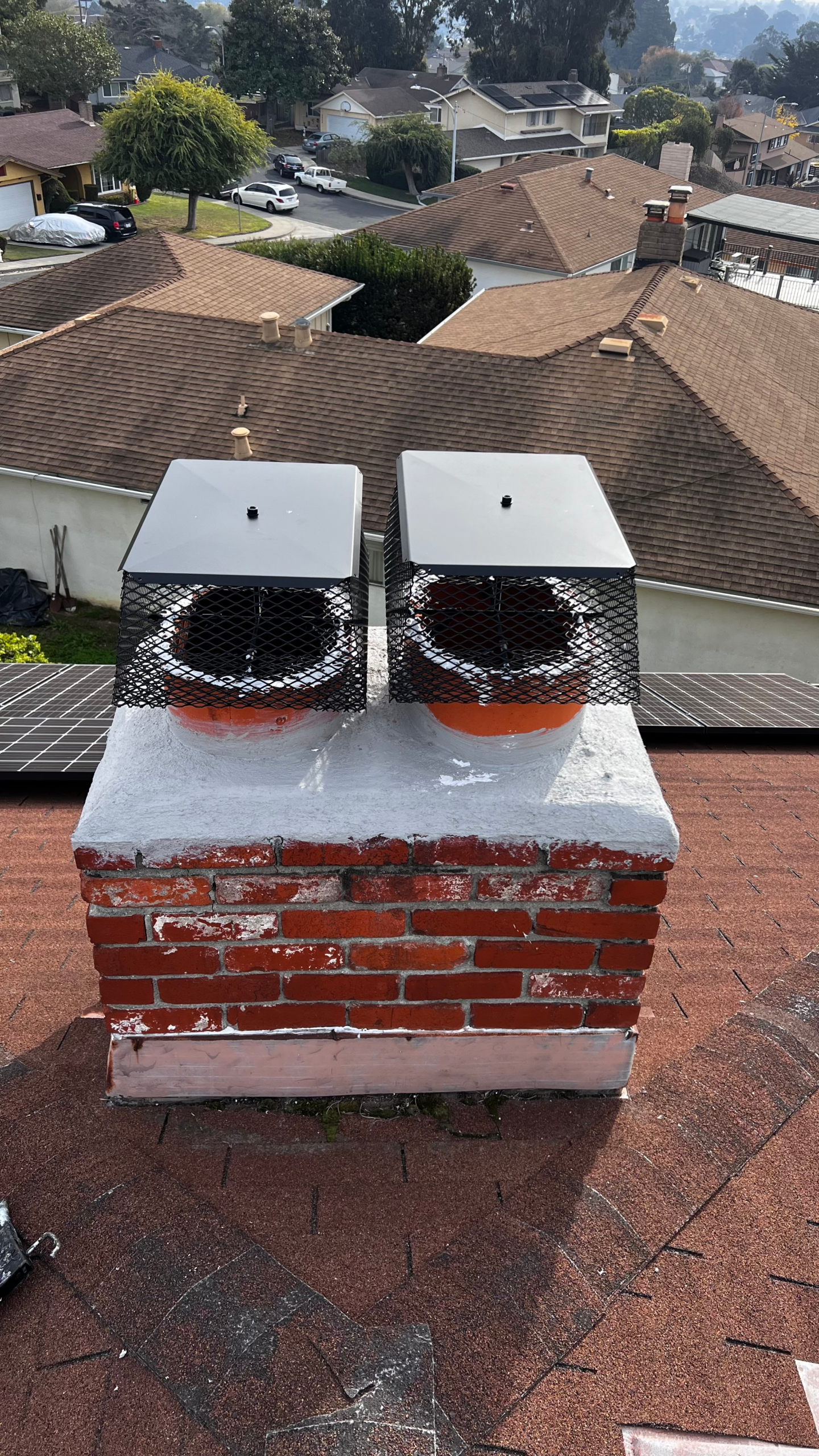
The chimney cap sits over the flue opening at the top of the chimney. It keeps out rain, debris, and animals. When a chimney cap is missing, damaged, or improperly fitted, the flue is exposed to the elements.
Missing caps are one of the most preventable causes of chimney damage. Replacing or repairing a chimney cap is a simple fix. As a result, it protects the whole system from water and nesting animals. Learn more about our chimney cap installation and repair service.
6. Smoke Backing Into the Home
Does smoke roll back into the room during a fire? In fact, that points to a draft problem. The flue may be blocked by debris, a bird or animal nest, or heavy creosote buildup. The damper may not be opening fully. There may also be a structural issue affecting airflow.
Smoke backing up is not just unpleasant — it introduces carbon monoxide and combustion byproducts into your home. If this is happening consistently, schedule an inspection with a professional before using your fireplace again.
7. Visible Leaning, Gaps, or Exterior Structural Damage
From outside, look at your chimney’s profile. A leaning chimney signals a serious problem. Watch for gaps at the roofline or separation from the house. Foundation movement, earthquakes, and long-term water damage all cause this. Of course, Bay Area homeowners know the earthquake risk well.
Structural chimney damage is not something to delay on. If you see visible shifting or separation, contact a chimney professional promptly. Our chimney repair service covers masonry repairs, structural issues, and everything in between.
Why Small Problems Become Expensive If You Wait
Chimney repair costs tend to grow with time. A cracked crown caught early may be a simple patching job. Leave that crack for a season or two, and the water damage spreads. Eventually, it can reach the liner, firebox, masonry, and even the roof and ceiling. What might have been a modest repair becomes a much larger project.
Annual inspections are the best way to catch issues before they escalate. Even occasional fireplace users benefit from a yearly inspection. It catches anything that developed quietly over the past year.
Frequently Asked Questions
How do I know if my chimney needs repairs versus just cleaning?
Cleaning removes buildup. Repair addresses structural or component damage. Many chimneys need both. During a professional cleaning, a technician will inspect the accessible components and note any repairs that appear to be needed. If repairs are found, we will explain what was observed and what the options are.
Is chimney repair covered by homeowners insurance?
It depends on the cause. Sudden damage from a storm or a covered event may be eligible for a claim. Damage from gradual deterioration or lack of maintenance typically is not. Check your specific policy and document any damage with photos before filing a claim.
How often should my chimney be inspected?
At least once a year, regardless of how often you use the fireplace. Annual inspections catch developing issues before they grow costly. They also confirm the chimney is safe at the start of each season.
Schedule a Chimney Repair Inspection in the Bay Area
Noticed any of the signs above? Or has it been over a year since your last chimney inspection? Cali Chimney can help. We provide chimney repair, inspections, and cleaning across the San Francisco Bay Area. That includes Oakland, San Jose, San Francisco, Fremont, Concord, and nearby communities.
Contact Cali Chimney to schedule a chimney repair inspection. We will assess your chimney and explain what we find. Then we give you an honest picture of what is needed.