If you own a wood-burning fireplace and want it to perform safely every season, the question we hear most often is a straightforward one: how often does each part of the system actually need attention? After 25 years of wood-burning fireplace service across the Bay Area, from older Craftsman bungalows in Berkeley to hillside homes in Mill Valley, our answer is the same every time. Maintenance is not a single annual event but a rhythm spread across the calendar, with each task timed to do the most good.
Why Wood-Burning Fireplace Service Follows a Seasonal Logic
Wood-burning systems accumulate stress in two distinct phases: the burning season and the off season. During the burning season, every fire deposits creosote inside the flue. Creosote is a tar-like byproduct of combustion that condenses onto the flue liner as smoke cools on its way out. In its early, flaky form it is manageable. Left to build up over multiple seasons without sweeping, it hardens into a glazed coating that is both difficult to remove and a genuine fire hazard.
The off season brings its own challenges. Moisture, birds, and small animals find their way into uncapped or damaged flues. Bay Area winters are wet enough that a chimney exposed to repeated rain cycles can suffer accelerated deterioration in the mortar joints, the crown, and the flue liner itself. Knowing which threats belong to which season helps you schedule the right service at the right time, rather than treating everything as one vague annual chore.
The Pre-Season Check: Your Most Important Appointment
Schedule a professional inspection and sweeping before the first fire of the fall. For most Bay Area households, that means late September through October, ahead of the cool evenings that make a fire feel necessary. This appointment does three things at once.
- Creosote removal. Any buildup from last season is cleared before it gets a chance to ignite during a hot fire this season. A professional chimney cleaning uses rotary brushes and specialized vacuums to remove deposits without pushing debris into the room.
- Structural inspection. The flue liner, damper, firebox, smoke chamber, crown, and cap are all examined. Our team looks for cracks, spalling brick, a damper that no longer seals properly, and any sign that the crown has begun to deteriorate. A thorough chimney inspection catches small problems before they become large ones.
- Cap and crown check. If the cap is missing, damaged, or sized incorrectly, that gets flagged immediately. A cap keeps rain, debris, and animals out of the flue all year. Many homes we visit in Concord, Fremont, and Fairfield have caps that were never replaced after a previous storm or repair, and owners do not know until we look.
Skipping this pre-season step is the single most common mistake we see. Homeowners assume that because their fireplace worked last year, it is fine this year. Creosote does not announce itself, and hairline cracks in a flue liner are invisible without a proper look.
Mid-Season Monitoring: What You Can Do Between Visits
A professional cannot be in your home every time you light a fire, so part of a sound maintenance rhythm is knowing what to watch for yourself. None of this replaces professional service, but it lets you catch warning signs early.
Watch the smoke behavior
Smoke that spills into the room instead of drawing up the flue is telling you something. The cause might be a closed or sticky damper, a cold flue that needs a warm-up, or a blockage. If it happens consistently after the flue should be warm, schedule a service call rather than assuming it will resolve on its own.
Check what you are burning
Seasoned hardwood, dried to a moisture content low enough that it burns cleanly, produces far less creosote than wet or green wood. Oak, madrone, and other dense Bay Area favorites are excellent choices when properly dried. Burning cardboard, treated wood, or garbage accelerates creosote formation and can introduce toxic compounds into your flue. This is one of the simplest things an owner controls directly.
Notice any new odors
A strong, acrid smell when the fireplace is not in use often points to creosote buildup interacting with warm air moving down the flue, or to an animal or moisture intrusion. Odors during a fire are somewhat normal, but a sudden change in smell quality warrants attention.
Look at the firebox after each use
You do not need specialized tools for this. Once the ash has cooled, glance at the firebox walls and the damper throat. Excessive soot on the front face of the firebox, or visible dripping on the firebox walls, suggests combustion is not as clean as it should be.
The Post-Season Sweep: Worth Doing Before Warm Weather Arrives
Many homeowners skip this step entirely, and we understand why. The burning season is over, so the fireplace feels like a low priority. The problem is that creosote and ash sitting inside a flue all summer trap moisture against the liner. Over months of warming and cooling in the Bay Area’s mild but damp shoulder seasons, that moisture accelerates corrosion in metal components and softens mortar joints in masonry systems.
A post-season sweep, typically in March or April for most Bay Area households, clears the flue before summer fog and humidity set in. It also gives our team a chance to address any chimney repairs identified during the season while the weather is dry and the work is easier to schedule. Mortar repairs, crown recoating, and cap replacements all go more smoothly in dry conditions.
If your household burns frequently, meaning more than two or three fires per week during the season, a mid-season sweep may also be warranted. Heavy use accelerates creosote formation, and the standard one-sweep-per-year guideline assumes moderate use. Our team can give you an honest assessment of your specific situation after looking at the flue.
Annual Inspection Intervals and When to Go More Frequent
Industry guidance recommends a Level 1 inspection at minimum once a year for any chimney that is in regular use. A Level 1 inspection covers all readily accessible portions of the system: the exterior, the interior of the firebox, the visible portion of the flue, and the basic components. If something in the system changed during the year, such as a heavy storm, an unusually large fire, or a purchase of a new insert, a Level 2 inspection is warranted. Level 2 typically involves video scanning of the flue liner from top to bottom, which gives a complete picture of liner condition that a visual check alone cannot provide.
Homes we service in older neighborhoods, like parts of Oakland, San Francisco, or Santa Cruz, often have chimneys that predate modern liner standards. These systems benefit from more frequent inspection because their original clay tile liners have had more years to develop cracks or joint deterioration. If your home was built before the mid-20th century and has not had a recent liner assessment, that is worth addressing as part of your service rhythm.
Our team has completed well over 4,700 chimney sweeps across the Bay Area, which means we have seen the full range of what happens when maintenance intervals are stretched too far. The repairs that result from deferred care are almost always more involved than the annual service that would have prevented them.
Fitting Repairs and Upgrades Into the Maintenance Rhythm
Routine sweeping and inspection are the foundation, but a complete wood-burning fireplace service rhythm also accounts for the components that wear out over time.
Dampers are a common point of failure. The original throat dampers in many Bay Area homes are cast iron that has been exposed to heat and moisture for decades. When a damper no longer closes fully, conditioned air escapes up the flue all summer and winter drafts flow in. Replacing a worn damper, or adding a top-mounted damper that doubles as a spark arrester, is a repair that pays for itself in comfort and energy efficiency.
Firebox repointing is another task that fits naturally into the pre-season or post-season window. The refractory mortar between the firebox bricks degrades with repeated heat cycling. When the joints begin to crumble, hot gases can penetrate the masonry behind the firebox, which is a structural and safety concern. Our team handles fireplace repair ranging from minor repointing to full firebox rebuilds, depending on what the inspection reveals.
Chimney cap installation or replacement often surfaces during an inspection as well. Many homes in Danville, Pleasanton, and San Rafael have older galvanized caps that have rusted through, or no cap at all. A properly sized stainless steel cap keeps rain out, reduces downdraft, and prevents nesting animals from establishing themselves in the flue between seasons.
Building a Service Rhythm That Actually Holds
The simplest version of a sustainable maintenance schedule looks like this. In late summer or early fall, book your inspection and sweep so the system is clean and cleared before the season begins. Burn only well-seasoned wood throughout the season and pay attention to smoke behavior and odors. In early spring, arrange a post-season sweep to remove anything the burning season left behind and to take care of any minor repairs before summer. Then repeat.
If you are a heavier user, or if your chimney is older or has known issues, adjust the frequency upward based on what your technician recommends after looking at the actual condition of your system. There is no single interval that works for every home, but there is a reliable framework, and a qualified professional can help you calibrate it to your specific situation.
Cali Chimney has been doing this work across the Bay Area for 25 years, earning the Angi Super Service Award each year from 2022 through 2025, because we focus on honest assessments and careful workmanship rather than upselling services that are not needed. If you want a team that will look at your fireplace and tell you exactly what it needs and what it does not, we are glad to schedule a time that works for you.
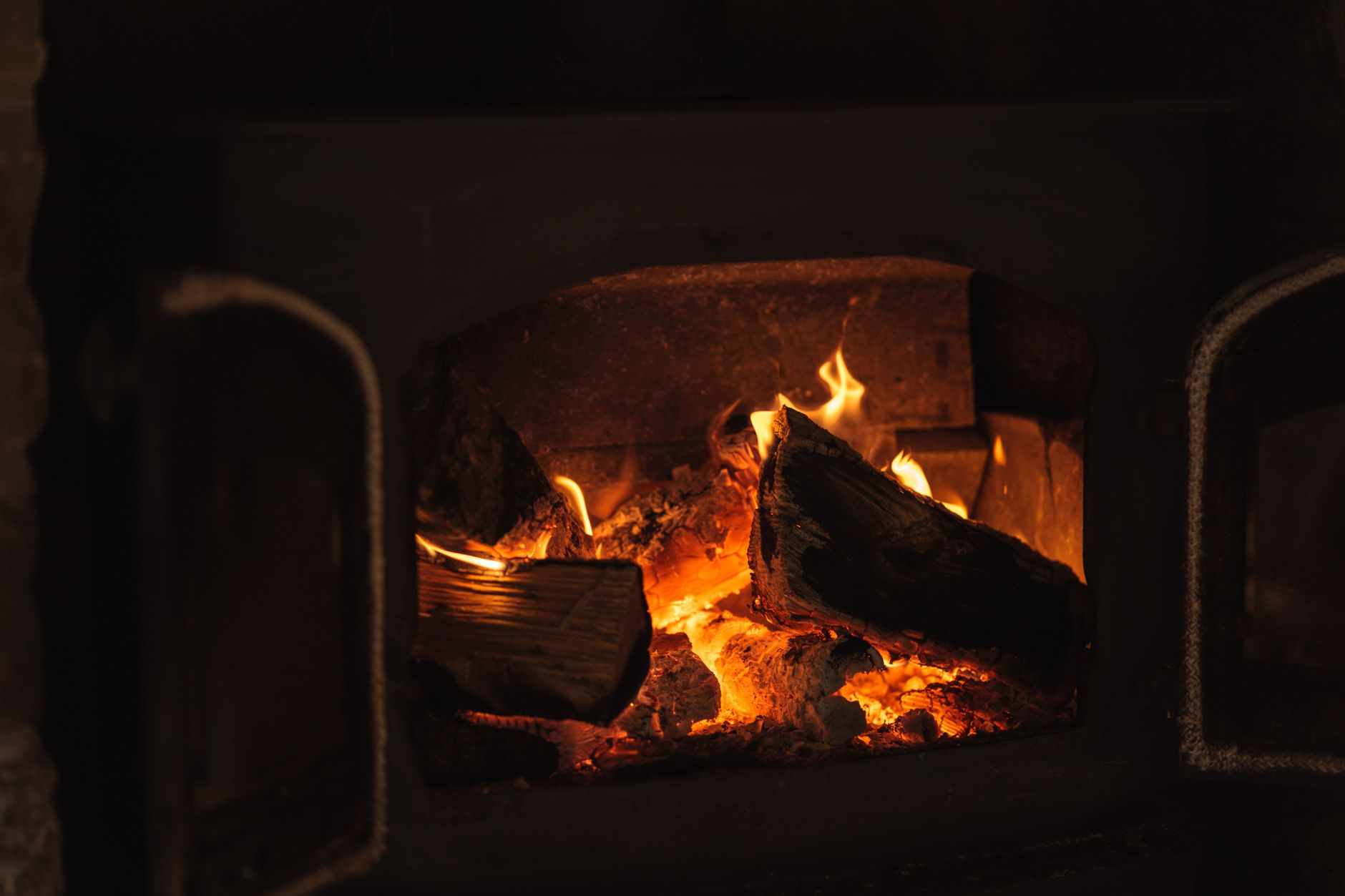
Photo by Olga Lioncat on Pexels.